Holly Fisher: Documents of Perception
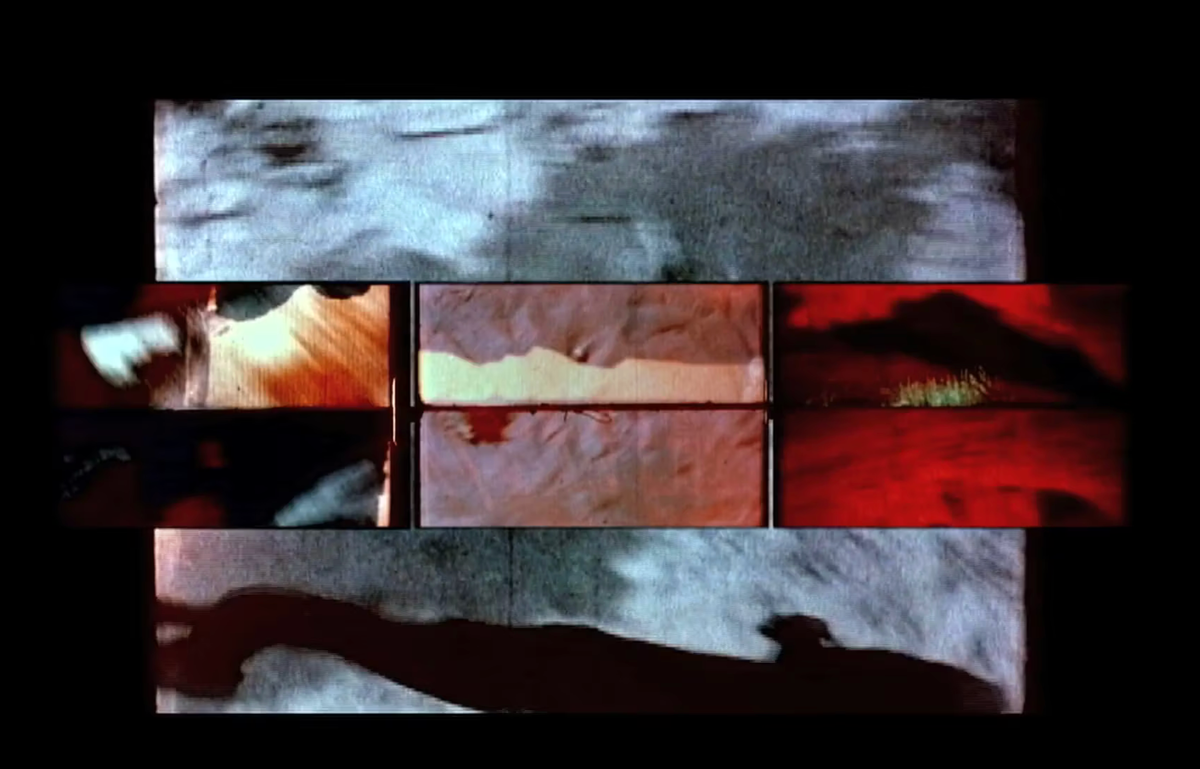
This is a version of an introduction I gave to a screening of Holly Fisher’s films at the Filmmaker’s Co-op on September 4, 2025, programmed by Giovanni Santia. The films shown, in order, were:
ghost dance wildwest suite, part III (1980, 16mm)
s o f t s h o e (1987, 16mm)
From the Ladies (1987, DCP)
Glass Shadows (1976, 16mm)
ghostdance for a new century (2015, DCP)
I wanted to say something before this program because I think these films are really beautiful, and when I saw them all together a few weeks ago I was overwhelmed. These films (with the exception of ghostdance for a new century) made between the late 1970s and the late 1980s, draw pretty clearly from the visual language of experimental short film, but in the broader sweep of Fisher’s career they sit amid some longer, more conventionally documentary films, like Who Killed Vincent Chin, from 1987, the same year as Softshoe. This suggested to me that there’s an opportunity here to think about this program, and Fisher’s filmmaking practice, as being connected by a thread other than degrees of abstraction, or a series of specific gestures of the filmmaker we tend to think of as experimental.
Fisher has said “I consider a project finished only when meditations on the physicality of the image are inseparable from the subject at hand,” which strikes me as the statement of a filmmaker who understands her own work as a viewer as well as its creator. Together, these films seem to propose a robust grammar of perception through and beyond the rush of who-where-when-what’s the story that can sometimes seem like what it means to know a place, to document something. They take seriously the strange, fragmented nature of perception as separate from the imposition of categories of knowledge on time and place that can often seem like an inseparable part of the act of perception.
The explicit architecture of editing contains these momentary acts of seeing–glances up to a blue sky and back down in ghost dance (1980), as color leaks from one feature to another, in memory’s blender. Moments–a few seconds or a single frame–are frozen, looped, given time to cohere. As Fisher says, “Whatever is my sleight of hand, my intent is to lead the viewer toward one’s own private insight, metaphor or other deepest reverie.” For me, the particular rhythm of the work accomplishes this, interrupting expectations of continuity at a small scale, pushing me as a viewer back, into reflection.
In s o f t s h o e, we see hands and feet and bodies at work, humans and animals caught in motion while passing through, magazine stands, the mess of architecture: the solid clean lines of a modern city’s metal arches, the internal architecture of layered frames with optical printer effects. The joy of the sideways overheard soundtrack, songs, bells, layered chattering conversations. The layered composition, the explicit structure of the frame constitutes a travelogue-film where the motion of the camera and its wielder is as in evidence as what it sees, the ostensible object of travel-spectatorship.
From the Ladies has the most explicit consideration of the place of the filmmaker, exhausting the possibilities of a single room, the people who inhabit it, maintain it, make it what it is, their absence as well as their inevitable presence in the constant evidence of their work. Glass Shadows similarly considers the filmmaker in relation to other bodies, what reveals itself, what is indicated by its absence–an interestingly literal consideration of the question film constantly asks about the relationship between shadow and negative space. These films invite the viewer to take up the place of the filmmaker, experiment with its possibilities.